



Climate change isn’t a future threat; it’s already multiplying the number of people exposed to deadly heat right now. Every year, extreme heat kills more people than any other weather event on Earth — and the crisis is accelerating. As temperatures rise, the burden falls hardest on those least able to escape it: outdoor workers baking on construction sites, informal laborers with no sick days or shade, and the millions of urban residents worldwide who live in informal settlements.
Recent philanthropic commitments have aimed to build much-needed momentum for climate adaptation and resilience efforts, which have long been fragmented, underfunded, and overlooked by philanthropy. In August 2025, on the first anniversary of the UN Secretary-General’s 2024 Call to Action on Extreme Heat, ClimateWorks Foundation and a coalition of funders launched the Adaptation & Resilience Fund (A&R Fund), with a mandate to focus first on extreme heat. To ensure our grantmaking was inclusive from the start, we issued an open call for solutions focused on heat-vulnerable urban communities across South Asia, Southeast Asia, and Sub-Saharan Africa.
After significant consultation and research, we homed in on two key obstacles that stand between heat-vulnerable communities and climate resilience: a shortage of money, and a shortage of political will and capacity. We designed the open call to address both obstacles head on, with one track for innovative finance solutions that unlock new capital for adaptation, and one for institutional capacity strengthening that equips governments to actually use it.
The open call drew an enormous response — a clear signal of both the scale of unmet need and the depth of expertise already at work in the world’s most heat-vulnerable communities. Our companion reflection explores what the process taught us about the field of extreme heat resilience, and why these solutions — and many more — must be funded at the scale demanded by the crisis.
Now, two years after the UN Secretary General’s Call to Action, we’re proud to share how the A&R Fund is delivering on its commitment by announcing the grantees from the open call. Specifically, the A&R Fund is awarding $9.3 million to organizations on the ground building resilience to extreme heat — a meaningful start, even though the need far outpaces the dollar amount. Notably, 80% of the organizations from the open call are first-time ClimateWorks grantees.
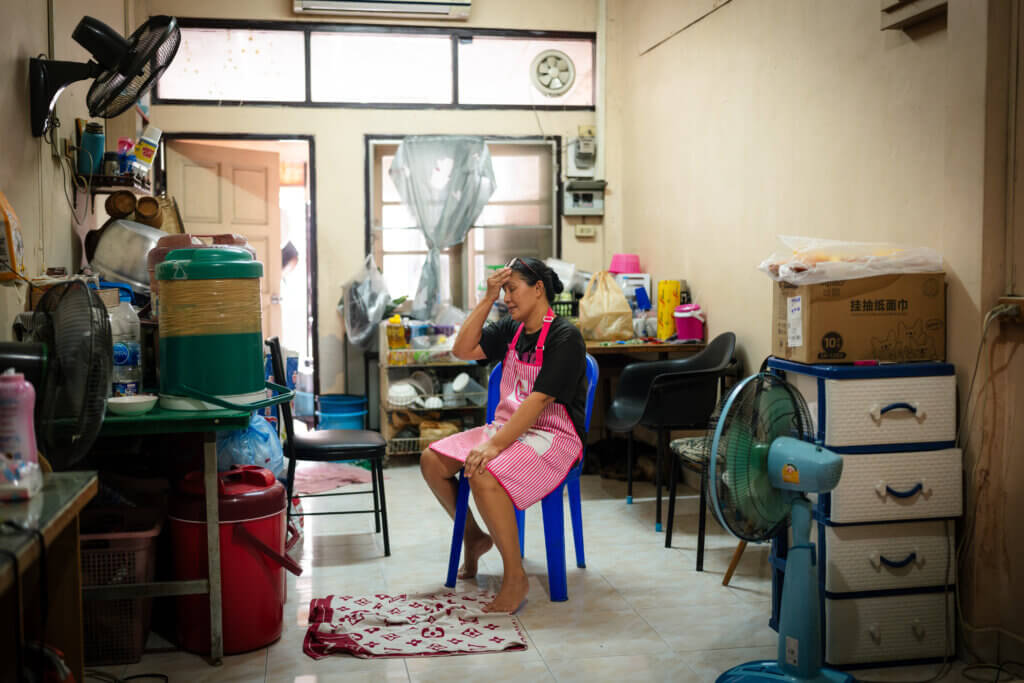
These grantees are building the future of heat resilience from the ground up, with groundbreaking solutions like parametric heat insurance, climate-adaptive social protection, municipal Heat Action Plans with concrete implementation pathways, and early-warning systems that reach people before the next deadly heatwave hits. What unites them is that every solution is built by and for communities closest to the challenge.
Innovative finance
African Risk Capacity Limited
Climate-adaptive social protection program for informal laborers
Region: Blantyre, Malawi
This pilot embeds parametric heat insurance within an existing national cash transfer system to deliver automatic payments to informal urban laborers during extreme heat events. It will generate evidence to scale climate-adaptive social protection to heat shocks in other cities.
International Food Policy Research Institute
Asset-based finance innovations targeting heat resilience for urban food vendors
Region: South Asia
Designed to bridge the financing gap for women street food vendors, this project will pair asset-based loans for mobile cooling solutions with a parametric repayment schedule that defers payments during periods of extreme heat.
StepChange Inc.
Climate-smart finance initiative: Scaling urban resilience with accessible physical risk data
Region: South Asia
This initiative tackles the lack of climate adaptation finance for heat-vulnerable small- and medium-sized enterprises by combining free physical climate-risk assessments with the design and piloting of tailored financial products, such as cooling equipment loans and workplace retrofits, in partnership with major banks.
Society for the Rights of the Excluded and Disempowered (SOREX)
Heat resilience microfinance and insurance for informal workers
Region: Lagos, Nigeria
This initiative develops a modular digital platform to make extreme heat measurable and financeable for informal workers, enrolling workers in a parametric heat-protection pilot while building the foundations for insurers, microfinance institutions, and regulators to engage with heat-risk finance.
United Nations Capital Development Fund
Financing climate-resilient water infrastructure
Region: Dodoma, Tanzania
Working with a subnational water utility, this project will help develop investment-ready, climate-resilient water infrastructure projects while pioneering a resilience water bond to mobilize private and public capital. The goal is to demonstrate a replicable financing model for sustainable urban water systems in semi-arid environments.
Build Change
Adapting homes for multi-hazard resilience to heat stress and climate risk
Region: Manila, Philippines
This pilot introduces a Heat Adaptation Loan product into existing microfinance institutions’ lending portfolios, pairing incremental home retrofit financing for interventions like roof insulation, reflective coatings, and ventilation with technical validation through demonstration homes. The goal is to embed heat-resilient housing finance as a permanent product line within microfinance infrastructure in the Philippines.
Institutional capacity building
DanChurchAid
Urban heat adaptation and community resilience action
Region: Uganda
The initiative pilots community-based approaches for integrating heat response into local government climate and disaster risk mandates. Starting with participatory heat-risk assessments, the initiative will produce technical evidence to inform national climate action plans. It will also feature community-led demonstration projects in urban cooling.
MicroSave Consulting
Strengthening institutional capacity and civil society leadership to address extreme heat in urban areas
Region: Phnom Penh, Cambodia and Hanoi, Vietnam
The project strengthens municipal and civil society capacity to respond to extreme heat, supporting the development of Heat Action Plans, delivering technical training for health and disaster management personnel, and enabling CSO-led community engagement. A learning platform will enable knowledge exchange between municipalities.
Self-Employed Women’s Association
Embedding worker-centered heat resilience in city governance
Region: South Asia
This initiative will work with municipalities to embed heat response as a routine, operational function in city governance rather than a one-off emergency response. It will strengthen interconnected systems of inclusive heat action plans, worker-centered early warning systems, cooling shelters and retrofitted green tenements that provide community-level cooling, and participatory monitoring processes led by local women worker “datapreneurs” to share outdoor worker experiences back into municipal planning cycles.
United Nations Foundation
Piloting parametric insurance and anticipatory action for heat stress in urban garment supply chains
Region: South Asia
When temperatures cross extreme heat thresholds, garment factory workers in this pilot will receive parametric payouts and pre-agreed factory responses, such as shift adjustments and cooling breaks. Building on an existing pilot that protected 50,000 informal women workers, the program aims to embed heat protections into supplier codes of conduct and municipal Heat Action Plans. This work will also embed anticipatory heat protocols directly into factory operations, strengthening union capacity to negotiate around heat data and building governance infrastructure to move protections from pilot to industry-wide standards.
Women in Informal Employment: Globalizing and Organizing
Strengthening informal worker advocacy for inclusion in urban heat action plans
Region: Bangkok, Thailand; Mombasa, Kenya
This project will build the capacity of organized informal workers to increase their inclusion in Heat Action Plans and climate adaptation strategies. It will conduct baseline research on heat impacts across three cities, document best practices, develop city-specific plans, and develop sector-specific occupational health guidelines for extreme heat and pilot protective gear and climate-adaptive infrastructure.