

Climate philanthropy hit a record milestone in 2024, surpassing 2% of total philanthropic giving worldwide.
The sixth edition of ClimateWorks’ analysis on funding trends in climate philanthropy charts a new high-water mark for the field. In 2024, climate giving reached about 2.1% of total philanthropic giving worldwide — exceeding the 2% threshold for the first time on record.
Yet critical gaps persist, with over 70% of foundation funding directed to a single country or region still flowing to the United States and Europe, despite strong cases for investment in climate-vulnerable regions across Africa, Asia, and Latin America.
Here, ClimateWorks’ Surabi Menon examines what’s working, what isn’t, and where funders should focus next.
You’ve been deeply involved in addressing the climate crisis, first as a scientist and now as a leader in philanthropy. Looking at the big picture, what jumps out to you in this year’s analysis on funding trends?
First off, we’re seeing impressive growth in climate philanthropy despite major headwinds. In 2024, for the first time, climate funding exceeded 2% of total philanthropic giving. Funding for climate change mitigation in particular reached $6 billion — which is more than double the 2020 total, and a 30% year-over-year increase since 2023. That’s the good news.
Having said that, the climate philanthropy community as a whole needs to address the fact that resources remain heavily concentrated in the United States and Europe, even as the energy transition is accelerating across regions where the global majority live — Asia, Africa, Latin America — where communities are embracing climate solutions as a direct path to resilient economies and better lives.
Where in particular do we see the transition accelerating, and what does philanthropic funding data tell us about the opportunities and challenges?
The report analyzes funding flows by geography, by sector, and by strategy. Let’s start with sectors: the top-funded sector by far is Clean Electricity at $840 million, or 13% of all sector-focused giving.
Looking at Clean Electricity by geography, it remains the top-funded sector across Africa, India, and Latin America. This makes a lot of sense given the desire for economic growth and the decreased cost of renewables (which are generally the cheapest form of energy). The renewable energy sector is seeing major growth: In 2023 there were about 35 million clean energy jobs, and that figure could grow another 10 million by 2030 if momentum holds. In terms of capital, global investment in clean energy reached $2.2 trillion in 2025. Still, it does take time to build out the infrastructure for Clean Electricity — and there is need for substantially more funding to expand energy access amid a global surge in electricity demand from electric vehicles, air conditioning, and AI data centers.
All this is taking place amid more and more extreme weather, so we also need to invest in making our grids more resilient to climate shocks. As a climate scientist, I’m very aware of this year’s potential for a “Super” El Niño to bring extreme heat, droughts, and flooding — with an outsized impact on global majority countries across Africa, Asia, and Latin America.
Did any sectors or geographies see a big jump in funding? If so, what do you think it tells us about bigger trends?
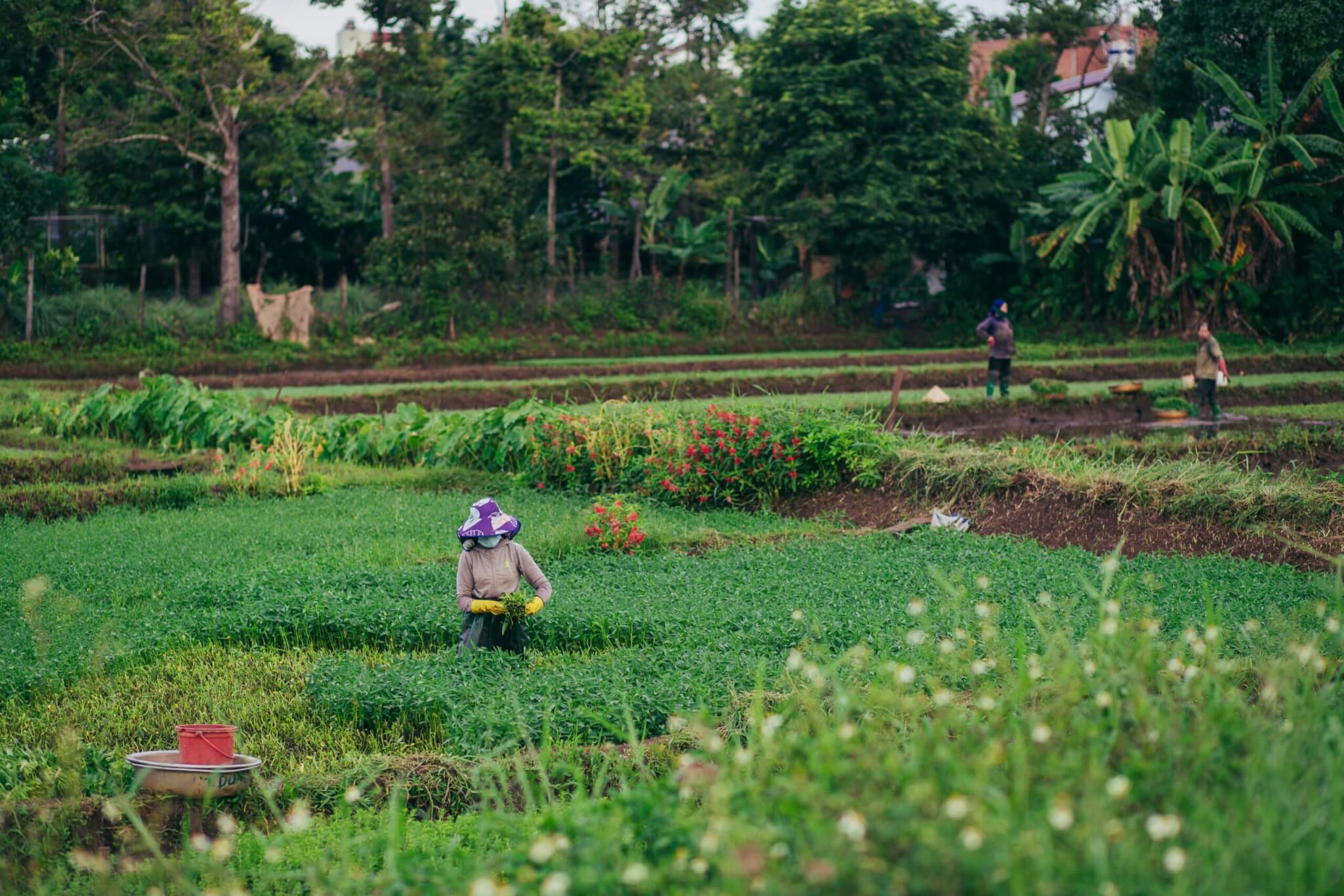
One increase that stands out to me is foundation funding for Food & Agriculture across Africa more than doubled — from $30 million in 2023 to nearly $80 million in 2024.
This points to the increased focus on food security as a key climate issue. Climate volatility disrupts weather patterns and seasonal cycles that farmers need to reliably produce food; furthermore, the U.S.-Israel war on Iran has increased regional volatility, leading to major fertilizer shortages. Let’s not forget that the food and agriculture sector is a major source of the carbon emissions that drive the climate crisis in the first place.
The increase in funding to Food & Agriculture is one example of increased focus on innovative climate solutions that address interconnected issues and systems, rather than treating climate as a separate issue area. It makes sense that funders are giving more to strategies like sustainable agriculture that both mitigate emissions and reduce countries’ dependence on importing food or fertilizers through vulnerable supply chains. This is a national security concern, not just an ecological and economic one.
The report shows that more than 70% of 2024 funding directed to a single country or region went to the United States and Europe — despite significant growth in climate action in Africa, Asia, and Latin America. What accounts for this funding gap?
It’s important to start by acknowledging that we’ve understood this problem for some time; previous editions of Funding Trends have highlighted this funding gap, but it persists and actually grew in 2024. So, my answers here are not to make excuses, but rather to understand some of the dynamics that contribute to the gap. When it comes to giving to Africa, Asia, and Latin America, foundations are often left to rediscover what already works. Funding Trends shows important baselines and starting points; the obligation now is to transfer that learning rapidly, not let it sit in a PDF.
There are real structural barriers, like limited due diligence capacity for geographies unfamiliar to the funders, thin grantee pipelines, board-level restrictions, cross-border compliance costs, and concerns about absorptive capacity. We need to invest in the intermediaries and local partners that can help navigate these barriers, including environmental, social, and economic ones. There’s a need for foundations to focus not only on getting money out the door — but on the infrastructure that’s needed to direct that money where it’s needed most.
At ClimateWorks, we work alongside Regional Climate Foundations, which bring the local expertise, relationships, and capacity to design and execute complex strategies as natural stewards of regional funding — moving money faster and closer to the ground where it can have the most impact. We look for solutions that drive economic growth — that’s the priority. Foundations have to focus their giving strategies on issues the countries themselves are grappling with, which are often related to economic growth and prosperity.
This is not about one or two grant cycles; this is about building infrastructure so local experts and communities can utilize philanthropic funding more effectively, and unlock bigger opportunities from philanthropy or other sources for the decades to come.
The report analyzes quantitative data through 2024, and previews 2025 survey and interview data for signals of how funding changed during a very turbulent year. What conclusions can we draw about 2025 funding, and where do you think funders can make the greatest impact going forward?
I’m encouraged by the early signals of 2025 funding, given the very challenging global landscape. Early indicators suggest that climate funding held firm or continued to increase in 2025.
Once the full set of data is in, it will be clearer to what extent geopolitical shifts may have reshaped the geographic, sectoral, and strategic priorities.
In terms of future directions, it’s clear that climate philanthropy needs to focus on funding climate solutions that improve lives and strengthen economies. The costs of clean energy infrastructure and technologies continue to decline, increasing the opportunity to align climate action with economic development, job creation, and innovation. Recent geopolitical shocks have disrupted global supply chains and increased energy and food costs, underscoring the need for clean energy, food, and materials produced domestically and regionally.
Early indicators suggest that climate funding held firm or continued to increase in 2025.
We also need to make funding more flexible and durable. Durable climate solutions require strategic investments in capacity development and institutional support. Yet the true scale of flexible giving remains difficult to measure because general operating and unrestricted support are inconsistently labeled. This is itself a call to action: funders and the field should adopt clearer, more consistent classification of flexible funding so it can be tracked, benchmarked, and grown with intention.
Last but not least, in our grantmaking, we must center the voices and the geographies that are most exposed to climate risk. The credibility of climate philanthropy depends on whether the people most impacted by climate change are shaping the strategies, not just benefiting from them. That remains unfinished work for all of us, including at ClimateWorks.